




GRASP Mentors
 Iman Aganj, PhD
Iman Aganj is an assistant professor of radiology at Harvard Medical School and an associate investigator at the Athinoula A. Martinos Center for Biomedical Imaging, where he focuses on innovating new imaging analysis techniques to advance human health. His research objectives are focused on developing these techniques and improving existing ones so that researchers and clinicians extract the maximum amount of useful information from the images. This ranges from deriving mathematical formulae via signal processing approaches to designing robust algorithms and machine learning.
Aganj has been a principal investigator on an NIH/NIDDK K01 career award, an NIH/NIA R56/RF1 research grant, a BrightFocus Foundation grant, a Massachusetts ADRC pilot award, and several computational resource grants. He joined GRASP as a participant in 2016 and became a work plan mentor in 2019 after receiving an R01. He received his BSc in computer science from Ecole Polytechnique (Paris), and his PhD in electrical engineering, with a focus on biomedical image analysis, from the University of Minnesota.
 Lora Bankova, MD
Lora Bankova is an associate physician in the Division of Allergy and Clinical Immunology at Brigham and Women’s Hospital and an associate professor of medicine at Harvard Medical School. Her research focuses on understanding how epithelial cells sense allergens and tissue damage, and how these signals initiate allergic inflammation and chemosensory dysfunction. As a physician-scientist, Bankova leads both a mechanistic research laboratory focused on epithelial sensing and a translational project investigating the immune dysregulation underlying chronic smell and taste impairment after COVID-19. To pursue these research questions, she received R01 funding from the National Institute of Allergy and Infectious Diseases and the National Institute on Deafness and Other Communication Disorders, as well as support from Harvard Catalyst pilot funding (Five Senses) and the Brigham Research Institute.
Bankova received her medical degree from the Medical University of Sofia in Bulgaria. She completed research training in Germany at Friedrich Schiller University in Jena, Johns Hopkins University, and University of Rochester. She completed an internal medicine residency at Johns Hopkins Bayview Medical Center and a fellowship training in allergy and clinical immunology at Brigham and Women’s Hospital. Bankova received an American Academy of Allergy, Asthma & Immunology Foundation faculty development award in 2017, and was elected to the Collegium Internationale Allergologicum in 2018. She is an alumna GRASP, which she joined in 2017 as a recipient of an NIH K08 Career Development Award.
 Bin Deng, PhD
Bin Deng is an assistant professor of radiology at Harvard Medical School and a principal investigator at the Athinoula A. Martinos Center for Biomedical Imaging at Massachusetts General Hospital. Her research integrates optical imaging, magnetic resonance elastography, computational modeling, and artificial intelligence to develop functional imaging biomarkers and wearable technologies for applications in cancer, women’s health, and neuroimaging. As a former GRASP mentee, Deng successfully established an independent research program through NIH K01, R21, and R01 awards. She is committed to mentoring early-career investigators in translational research, grantsmanship, and career development.
 Sarah Kunz, MD, MPH
Sarah Kunz is a neonatologist and health services researcher at Beth Israel Deaconess Medical Center and an assistant professor of pediatrics at Harvard Medical School. Her research focuses on neonatal regionalization, with a goal of improving care and outcomes for infants by better understanding and optimizing their systems of care. This means ensuring they are either born in the right setting, or appropriately and seamlessly transferred to receive risk-appropriate care. By developing new approaches to quantify neonatal regionalization utilizing network analysis in addition to traditional epidemiologic approaches, her work will better define the context of care for sick infants. Ultimately, the goal of her work is to improve these systems to improve clinical and care equity outcomes.
 Amy Lo, PhD
On-Yee “Amy” Lo is an assistant professor of medicine at Harvard Medical School and an assistant scientist II at Marcus Institute for Aging Research at Hebrew SeniorLife. Lo was initially trained as a physical therapist before completing her PhD in human physiology. Her research focuses on preventing functional decline and enhancing functional independence for older adults who have mobility and/or cognitive impairments by conducting experimental and translational research. Lo completed the Harvard Catalyst Clinical and Translational (C/T) Research Academy (now called C/T Research Academy First Grant Bootcamp) in 2018 and was granted the Harvard Catalyst KL2 (now called K12) Training Award in 2019. In 2021, she received her NIH/NIA K01 Award with a perfect score on her first attempt.
 Brad Manor, PhD
Brad Manor is the director of the Mobility and Falls Research Center at the Hinda and Arthur Marcus Institute for Aging Research at Hebrew SeniorLife. He is an associate professor of medicine at Harvard Medical School and Beth Israel Deaconess Medical Center. Manor’s research goal is to alleviate the burden of balance decline that often accompanies biological aging into senescence. He works to achieve this goal by identifying links between brain function, balance, and falls in older adults by designing interventions to improve balance by optimizing brain function and exploiting its adaptive properties.
 Sarah Morton, MD, PhD
Sarah Morton is a physician-scientist at Boston Children’s Hospital. She works in the neonatal intensive care unit and runs a research group focused on how genetic and other factors impact lifelong health for people with congenital heart disease.
 Sarita Patil, MD
Sarita Patil established her laboratory at the Center for Immunological and Inflammatory Diseases at Massachusetts General Hospital (MGH) in 2018 with a focus on elucidating the allergen-specific humoral response in food allergy. Using allergen-specific B cell multimers, single cell sequencing, recombinant antibodies, and proteomics, her lab works on understanding the mechanisms of antibody-based tolerance in allergen immunotherapy and modulation of effector cell responses. As a translational researcher in food allergy, she is involved in clinical trials for food allergy, both at MGH and through the Immune Tolerance Network (ITN). She established the Multidisciplinary Adult Eosinophilic Esophagitis clinic in 2013 which she continues to administer.
Patil joined GRASP as a participant in 2015 and became a work plan mentor in 2019 after receiving an R01. She received her undergraduate degree with honors at Stanford University and her medical degree from Duke University School of Medicine. She completed an internal medicine residency at University of Pennsylvania and an allergy and immunology fellowship at MGH. She joined the laboratory of Wayne Shreffler for her postdoctoral laboratory training, along with co-mentorship by Chris Love at MIT.
 Giselle K. Perez, PhD
Giselle Perez is an associate professor at Harvard Medical School and a clinical psychologist at the Massachusetts General Hospital (MGH). She is the director of adolescent and young adult research and associate director of the MGH Adolescent and Young Adult Cancer Survivorship Program. Perez has a strong interest in behavioral intervention research and is committed to identifying innovative solutions to improve health outcomes among vulnerable and underserved groups, particularly adolescents, young adults, and posttreatment survivors. Clinically, she specializes in working with young adults on managing the unexpected social and emotional challenges that occur after cancer treatment, improving stress and anxiety symptoms, coping with uncertainty, and promoting health behavior change. In particular, her work examines the physical, psychosocial, and biobehavioral effects of stress, as well as stress interventions in cancer survivors.
 Susan MacLauchlan, PhD
Susan MacLauchlan is an assistant professor of medicine at Brigham and Women’s Hospital (BWH) in the Division of Rheumatology. She received her PhD from Yale University and completed postdoctoral research at Boston University School of Medicine and University of Massachusetts Medical School before joining BWH in 2019. MacLauchlan’s research interests center around the mechanisms causing increased risk of cardiovascular disease in patients with rheumatoid arthritis (RA). Her previous work used animal models to demonstrate the causality of clonal hematopoiesis to worsening cardiovascular disease. MacLauchlan’s current research centers around hematopoietic dysfunction in rheumatoid arthritis as a potential mechanism contributing to cardiovascular disease risk in RA patients.
MacLauchlan joined GRASP as a mentee in 2020 and became a mentor in 2026. She has received a K01 on the role of clonal hematopoiesis in RA and subsequently has received foundation awards for her work (Arthritis National Research Foundation, the Rheumatology Research Foundation, and the Arthritis Foundation), and R03 funding.
 Inga-Marie Schaefer, MD
Inga-Marie Schaefer is an assistant professor of pathology at Harvard Medical School, an associate pathologist at Brigham and Women’s Hospital, and an associate member of the Broad Institute. She serves as director of autopsy pathology at Brigham and Women’s Hospital, where she oversees a nationally recognized autopsy service dedicated to patient care, medical education, quality improvement, and research. Schaefer is also an attending pathologist on the Bone and Soft Tissue Pathology Service, where she specializes in the diagnosis of bone and soft tissue tumors and the integration of molecular pathology into clinical care. Additionally, she leads an independent translational research program focused on the molecular pathogenesis and therapeutic vulnerabilities of sarcomas. Her laboratory integrates molecular pathology, functional genomics, and experimental therapeutics to identify novel treatment strategies for these rare and aggressive cancers. Schaefer’s research has uncovered key mechanisms driving sarcoma development and progression, identified new therapeutic targets, and established innovative preclinical models that accelerate the translation of laboratory discoveries into new treatments. Her work has been supported by the National Cancer Institute, the American Cancer Society, and foundations dedicated to advancing sarcoma research.
Schaefer received her medical degree from the Georg-August University of Göttingen, Germany, and the University of Bern, Switzerland. She completed residency training in anatomic pathology at the University Hospital Göttingen and at Brigham and Women’s Hospital.
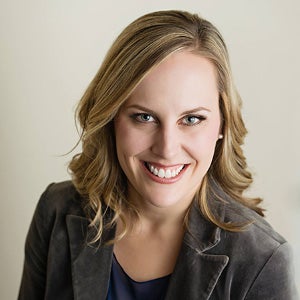 Christine B. Sieberg, PhD, EdM, MA
View Christine Sieberg’s bio.
 Alexandra Touroutoglou, MSc, PhD
Alexandra Touroutoglou is an associate professor of neurology at Harvard Medical School (HMS) and the director of imaging operations in the Frontotemporal Disorders Unit at Massachusetts General Hospital (MGH). Touroutoglou specializes in brain imaging and non-invasive brain stimulation in aging and neurodegenerative diseases. She leads clinical trials with innovative personalized treatments to mitigate cognitive symptoms in dementia. In 2016, her team was among the first research groups to identify superagers, a remarkable group of older adults with brains that refuse to age. Currently, she is using insights from superagers to develop brain stimulation treatments for memory decline in Alzheimer’s disease.
Her research is funded by the U.S. National Institute of Health. Her findings have been featured around the world, including the National Geographic, BBC, and The New York Times. In 2023 she was invited to talk about her work on superagers at the United Nations. Touroutoglou has won numerous awards for her work, including an award from Institute of International Education/Fulbright Foundation, Woman in Science Award from the Rockefeller University, and the Anne Klibanski Award from MGH. Recently, she was been awarded the 2024 Rising Mentor Award in recognition of her contributions to mentoring students, residents and junior faculty at HMS over the last 10 years.